
How Famous Coffee Brands Use Coffee Cup Design to Build Their Identity
A great cup of coffee is about more than what is inside the cup. For many coffee brands, the cup itself has become an important part of the customer experience—and a powerful tool for building brand recognition.
From Starbucks' iconic green Siren to Costa Coffee's distinctive red branding, famous coffee chains understand that a well-designed coffee cup can communicate a brand's personality before the first sip.
So, what makes a coffee cup design memorable? Let's take a closer look at how several well-known coffee brands use their cups and logos to create a recognizable identity.
Why Coffee Cup Design Matters for Branding
For takeaway coffee businesses, the coffee cup is more than packaging. It travels with the customer through offices, streets, cars, airports, and social spaces.
That makes a takeaway coffee cup a small but highly visible piece of brand communication.
A successful coffee cup design can help a coffee shop:
Build immediate brand recognition
Communicate its personality and values
Create a consistent visual identity
Make takeaway products more memorable
Encourage customers to associate a visual symbol with the coffee experience
In other words, coffee cup branding connects the physical product with the brand behind it.
Some of the world's most recognizable coffee companies have built strong visual identities around exactly this idea.
1. Starbucks: The Siren as a Global Coffee Symbol
Few coffee logos are as recognizable as the Starbucks Siren.
Starbucks opened its first store at Seattle's Pike Place Market in 1971. From the beginning, the brand used a twin-tailed Siren inspired by imagery found in old marine books. The symbol reflected Seattle's maritime environment and the seafaring tradition associated with early coffee traders.
The Starbucks logo has evolved several times over the decades. The brand moved from an original brown design to a green identity in 1987, while later versions increasingly emphasized the Siren itself. In 2011, Starbucks introduced the current simplified Siren logo without the company name around it.
This is an important lesson in coffee branding: a strong visual identity can eventually become recognizable without requiring the brand name to be written out.

When customers see the familiar green-and-white cup and Siren, the visual language itself can immediately suggest Starbucks.
2. Costa Coffee: Simple, Distinctive and Consistent
Costa Coffee has a different visual approach.
The company was founded in London in 1971 by Italian brothers Sergio and Bruno Costa. Before opening their first coffee shop, the brothers developed their signature Mocha Italia blend by testing numerous coffee combinations. That blend remains an important part of the company's coffee heritage.
Costa's branding demonstrates how a coffee company can use relatively simple visual elements to create recognition.
Its strong use of red, combined with the COSTA wordmark and coffee-related imagery, creates a distinctive appearance across its stores, packaging, and takeaway cups.
The lesson is straightforward: a coffee cup does not need a complicated illustration to stand out. A consistent color palette, logo, typography, and overall design can be enough to create a memorable brand presence.
3. The Coffee Bean & Tea Leaf: Connecting Coffee and Tea
The Coffee Bean & Tea Leaf takes a different approach by incorporating both coffee and tea into its identity.
Founded in Southern California in 1963, the company began as a coffee service business before opening its first store. Over time, it developed a broader identity around both coffee and tea.
Its name itself communicates the two core categories of the business: coffee beans and tea leaves.
The brand is also closely associated with its Ice Blended® drinks. According to the company, the original Ice Blended® beverage was developed at its Westwood location in California in the 1980s and eventually became one of its signature products.
This illustrates another important principle of coffee shop branding: a distinctive product can become part of the brand identity just as strongly as a logo.
When a particular drink, package, cup, or visual style becomes closely associated with a coffee company, it can reinforce recognition every time customers encounter it.
4. Atam Cafe: Bringing Vietnamese Coffee Culture to the Cup
Not every memorable coffee cup needs to follow the visual language of a global chain.
Atam Cafe takes a more culturally focused approach by incorporating Vietnamese coffee and cultural elements into its coffee cup designs.
As a Vietnamese-owned coffee brand, Atam Cafe aims to introduce Vietnamese coffee and coffee culture to customers beyond Vietnam. Its cup designs can feature Vietnamese-inspired visual elements and, at times, recognizable Vietnamese landmarks and cultural imagery.
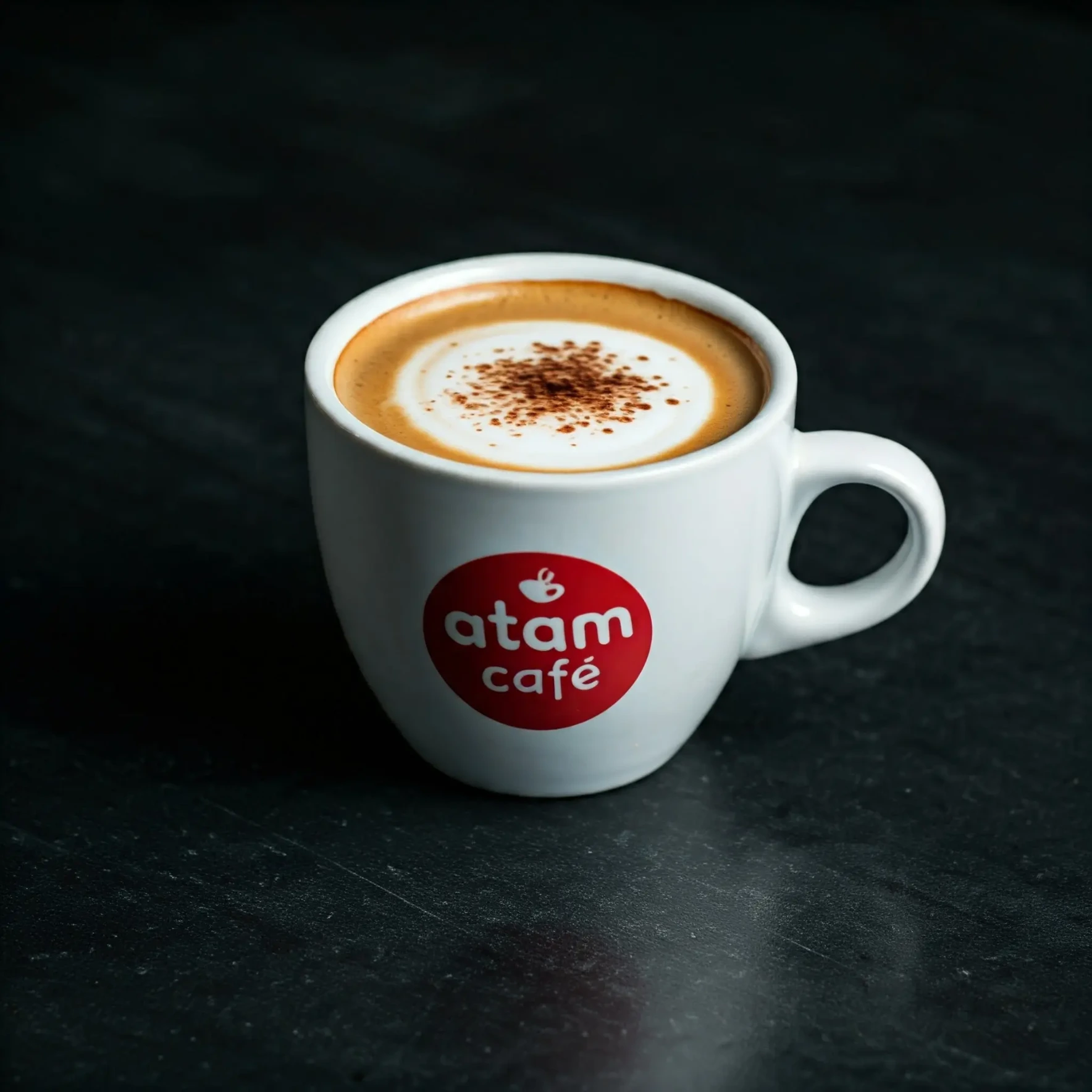
This approach gives the coffee cup another role: it becomes a small storytelling medium.
Instead of communicating only a brand name, a coffee cup can communicate where the coffee comes from, what the company represents, and what kind of cultural experience the customer can expect.
For Vietnamese coffee brands looking to reach international markets, this can be particularly valuable. Vietnam has a distinctive coffee culture, from traditional phin brewing to its strong coffee traditions and growing reputation as one of the world's major coffee-producing countries.
A thoughtfully designed coffee cup can help turn that heritage into a visible part of the customer experience.
What These Coffee Brands Can Teach Us About Coffee Cup Design
Although Starbucks, Costa Coffee, The Coffee Bean & Tea Leaf, and Atam Cafe have very different histories and visual identities, they demonstrate several common principles.
1. Make the brand recognizable
A coffee cup should make it easy for customers to identify the brand and your private label.
A memorable logo, color combination, typeface, illustration, or symbol can become a visual shortcut for the entire coffee experience.
2. Keep the visual identity consistent
Strong coffee branding is not about creating a different design every time.
The same visual language should ideally appear across coffee cups, packaging, menus, websites, stores, social media, and other customer touchpoints.
Consistency helps customers remember the brand.
3. Tell a story through the cup
A coffee cup can communicate more than a logo.
It can tell customers about a company's history, origin, culture, values, or signature products.
Starbucks uses the Siren to connect its identity with its historical roots in Seattle and the maritime world. Costa emphasizes its London heritage and coffee tradition. The Coffee Bean & Tea Leaf connects its identity with both coffee and tea, while its Ice Blended® drink has become part of its brand story.
4. Turn packaging into a brand experience
Takeaway packaging has an advantage that many other forms of advertising do not: customers carry it with them.
A well-designed coffee cup can appear in offices, meetings, restaurants, shopping areas, airports, and social media photographs.
In this sense, coffee cup design can function as a form of everyday brand exposure.
A Coffee Cup Can Be More Than Packaging
Coffee quality will always be at the heart of a coffee business. But the way that coffee is presented also influences how customers experience and remember a brand.
For coffee shops, roasters, and coffee companies, a takeaway cup is therefore more than a disposable container. It can become a moving brand message, a visual signature, and even a piece of the company's story.
The most successful coffee brands understand that customers experience a brand through many small details. The logo, colors, typography, packaging, store design, service, and—of course—the coffee itself all contribute to that experience.
A well-designed coffee cup brings these elements together in a simple object that customers see and carry every day.
That is why coffee cup design and coffee branding deserve as much attention as the coffee inside the cup.