What is roasted & ground coffee?
What is roasted coffee?
Roasted coffee, or some might name 'baked coffee', is the result of green (unroasted) coffee beans after being roasted by a roasting machine. The roasting machine or in other word, a roaster, can be a modern machine with a full option of technology or simply a roasting pan, just like the way you roast your nuts every day. The most popular ways to roast green coffee beans are by heat, e.g. gas, wood or charcoal and by electricity. Roasted coffee beans are the first or important step to enjoy a great cup of coffee because we cannot brew green coffee beans directly.

What is ground coffee?
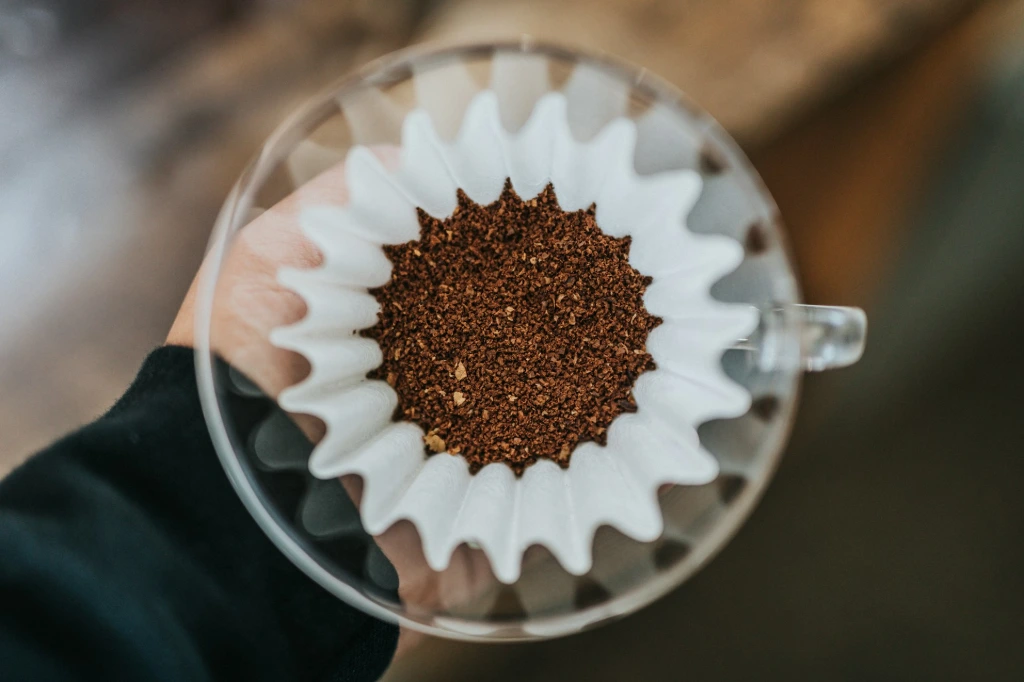
After we grind roasted coffee whole beans into powder, we have ground coffee or ground coffee powder. We, of course, need a grinder to grind the roasted coffee beans into different smaller particles and finally into fine powder. Although people had only one choice to grind the beans with mortars and pestles or stone millers, nowadays coffee beans are almost ground by grinders.
Grinders are divided either by source of power or by ways of grinding. From the point of source of power, basically we have manual grinders which we grind coffee beans by hands and electric grinders which the electric grinders grind the beans smoothly.

And, of course, as we all know, ground coffee with brewing boiled water means your perfect cup of Joe is waiting to enjoy.
Why do we say 'roasted & ground coffee'?
Naturally you can say 'roasted coffee', 'roasted coffee whole-beans', 'ground coffee' separately. However, unlike other kinds of beans or nuts that you can eat or consume directly, coffee beans must be ground to 'consume', to 'brew', to 'enjoy', to 'entertain', to 'treat', to 'reward', and to 'celebrate' or even to 'show'. No one eats roasted coffee beans directly though they are edible indeed. When the beans are ground, aroma will be liberated from the cells that will be captured and extracted by hot water brewing, there comes the great cup of coffee of full aromatic flavors. If we don't grind the beans into powder, we cannot extract the aroma and flavor during brewing steps. That's why 'roasted & ground' is a special unique vocabulary for coffee.
Simply saying, coffee cherries (berries or fruits) ➕ drying ➡️ green coffee ➕ roasting ➡️ roasted coffee ➕ grinding ➡️ ground coffee.
What are roasting profiles & grinding sizes?
What are the roasting profiles?
The main roasting profiles of coffee beans are light roast, medium roast and dark roast. The light roast, medium roast, dark roast will turn green coffee beans into yellow color, brown color and dark color respectively. Different roasting degrees will develop different aromas and tastes for roasted coffee beans. Since there are many coffee origins from coffee-planting countries, each coffee origin has its own proper roasting profile. For example, the WSCAFE Da Lat single origin arabica is most suitable with medium roasting degree in which it will have the notes of chocolate, baked bread and citrus fruit.
Additionally, other roasting profiles you might know are Vietnamese roast, French roast, England roast, Italian roast, etc. Or, you can do your own-created roast if you like because creation means coffee.
What are grinding sizes?
Roasting plays an important role to a perfect cup of coffee. Grinding plays an important role to a cup of excellence, too. Different grinding sizes contribute different cupping notes. And, each brewing technique is suitable to each grinding size. If you grind the beans to the coarse size, the best way to brew is French press.
The main grinding sizes are coarse, medium and fine. However, in the world of coffee consumption today, fine grinding size for espresso machines is the most popular one as billions of cups of espresso coffee are being consumed a day worldwide. Other mixes of grinding sizes we have extra-coarse, medium-coarse, medium-fine, extra-fine, and micro-ground.
Micro-ground is a specially ground coffee powder which the beans will be ground through roller grinders. This size is suitable for making coffee capsules.
The roasting & grinding techniques & know-hows?
The techniques and know-hows of roasting
To master the roasting of green coffee beans will hold the success of your coffee business. That is not an easy task and needs great efforts and practices. Roasting not only decides the quality of a roasting batch but also generates the advantages and uniqueness of a coffee house. In doing business, we say it 'know-how'. With years of roasting experiences, WSCAFE has continously accumulated 'techniques' + 'know-how' to seamlessly maintain high-quality roasting for every single batch.
First, understanding the green coffee beans before you roast is very important. Different beans require different roasting approaches. We must check the situation of green coffee beans by lots from varieties of coffee beans (robusta or arabica), moisture, density, processing methods, defects, the sizes, growing origins to crop year and even storage history.
To make sure, experienced roasting masters will test with some small sample roasting batches with sample roasters before roasting any larger batches. This will help them to have a specific plan for the whole lot.
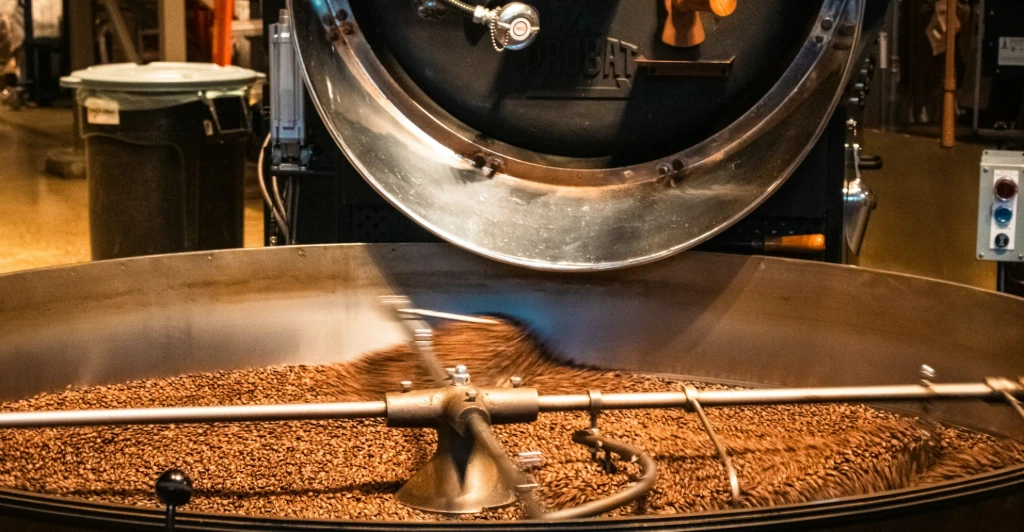
Second, roasting facilities must be well-equipped. With the advanced breakthrough of roasting technologies nowadays, the facilities are very important for a roaster. They are modern roasting machines with a supporting system from loaders to roasters, coolers, destoners, mixers and storage silos. The facilities give a roaster free time to focus on beans during roasting processes.
The hi-tech roasting system that is fully automatic and with a touch screen display control panel is a genuine hands-free tool for roasters. The future of roasting like a game seems on our hands very soon.
Third, slow roast or quick roast? Wood, charcoal, gas (gas LPG) or electric? The same beans will get different results with slow roast and quick roast. The time for roasting can be monitored by a timer on the machine or by experience which the roasting masters can listen to the beans, see the smoke, smell the aroma to decide the time. Among wood or charcoal, gas (gas LPG) and electric, gas is the most popular source of heat for roasting coffee as it is ready, completely burnt, easy to adjust the temperature. However, electric roasters also have its own fans for home-roasted coffee and wood or charcoal, the traditional method, is still preferred by some roasters.
Some coffee brands are using wood-fired roasters, mostly oak or mesquite which has special aromatic notes in order to enrich the aroma of the roasted coffee beans. And they advertise them as unique selling points.
The techniques and know-hows of grinding
Unlike other kinds of nuts or beans which you just grind them unconditionally, grinding roasted coffee beans are so sophisticated. The wrong grinding techniques will ruin the coffee beans which initially are the good ones and leave us a bad cup of espresso. Thus, we follow strict steps of grinding coffee beans.
First, the grinding space really matters. A cool or even air-conditioned room for grinding coffee beans will help to maintain the aroma and flavor a lot. The cool room with low temperature and low moisture is to prevent the loss of coffee aroma and flavor, in which low moisture particularly helps ground coffee powder to avoid absorbing moisture from the air which will change the coffee quality.
Second, choosing a right grinder is crucial. While a small manual coffee grinder run by your hands looks so cute and fantastic, it is not a convenient way to grind coffee beans. Today, the majority of grinders are run by electricity and they are blade, burr and roller grinders. Among them, burr grinders are the most favorite ones because they are designed for espresso machines and the grinding quality is good. While the blade grinders are cheap but unable to grind well and smoothly, the roller grinders are the perfect grinders but quite expensive and specially designed for coffee capsules.
Third, different brewing methods need different grinding particle sizes. Mistaken grinding sizes will result unwanted cups of coffee and are unable to change. For example, you brew coffee with a Vietnamese phin filter/dripper but you initially grind the coffee beans too fine, that size is definitely unable to make a good cup of espresso.
Although the ready-to-brew ground coffee is more convenient than roasted coffee beans, many people love to grind coffee beans before they brew coffee. This way will rise the drinking experience and helps to create a freshly-brewed cup of coffee.
Home roasting & Factory roasting
Home roasting
Though roasting is a difficult skill, luckily you can roast coffee beans at home. At small amount of coffee, definitely. Home roasting is a hobby indeed. There are a number of choice for a home roaster. One can get started small and simple with some green coffee beans and a roasting pan. That's it! So easy. However, a life-long roasting 'veteran' can equip his home as professional as a coffee roasting factory with full machines, tools and gears. He is not only roasting but also 'playing', 'collecting' coffee.
Factory roasting
Factory roasting is clearly a large-scaled roasting activity with industrial and commercial coffee roasting machines. It is a compact system from loading green coffee beans, roasting the beans with big roasters, cooling the beans to destoning the beans and storage in silos. Factory roasting batches cater the large order of huge quantity and strict quality criteria. It requires to deploy a specific roasting plan in which we have to check the power supply, the gas (gas LPG) supply, the roasters, etc. very carefully with meticulous checklists. A failed batch will pay a high cost because we cannot roast them again well.
The myth of packaging roasted & ground coffee?
What is the packaging of 'roasted & ground coffee'?
Unlike green coffee beans which are easily packed in jute bags, roasted and ground coffee requires a tighter, stronger and more durable package. The packaging must help to maintain the freshness of roasted and ground coffee stored inside. The popular packaging solutions are vacuum bags, laminated bags with degassing valves or tin cans with degassing valves. Laminated stand-up pouches with a resealable zip-lock and valves are perfect for storing roasted & ground coffee after openning.
Which are the popular packaging materials?
Craft bags seem to be the traditional packaging material for roasted and ground coffee. However, laminated bags nowsaday are the most popular materials thanks to the storage capacity, super-fine printed quality and diversified models. Tin cans or tin boxes are also a good choice but it is more difficult to pack, repack and costly. Capsules are also very popular but they require a huge investment from the single-pod brewers to grinding, packaging facilities.

Commercial coffee, fine coffee & specialty coffee
What is commercial coffee?
The commercial coffee is the coffee for the massive markets. They are real and authentic coffee but afforable prices and serving lower-end to middle-end markets. The roasting and grinding can be carried out by industrial roasters and grinders which are covering the overall quality for the whole lots. A new roasting staff can take care the machines under the supervision of a skilled roaster.
The commercial coffees are mainly coffees of mainstream quality of common processing methods, especially unwashed coffee beans.
What is fine coffee?
The fine coffee is the coffee products which have better quality. They are well-selected green coffee beans which are carefully proceeded, mostly natural, washed, semi-washed processing. The beans are good at quality with less defects. The roasting and grinding for this type can be either industrial roasters and grinders or shop-sized ones; however, they must be done by a professional roasting master.
What is specialty coffee?
Specialty coffee or speciality coffee is coffee of super-fine quality with high SCA's scores as low as 80 points. This is special, unique, rare and limited. It is believed that specialty coffee is always Catimor and original arabica, e.g. Typica, Caturra, Bourbon, Mocha, Catuai, Geisha, etc. However, in Vietnam in recent years, many producers are marketing Robusta Fine Cup, which is processed by natural, washed or honey processes, as a specialty coffee.
The roasting and grinding for specialty coffee must be special as well. It usually is a micro-lot and small-batch roasting by artisan roasters and grinders managed by a pro-rated roasting master.

Drips, nitrogen flushing: the innovative solution for artisan coffee experience.
The innovative solution for packaging roasted and ground coffee.
The drips together with pour-over hanging ear paper drips are truly an innovative coffee package for roasted and ground coffee. The roasted and ground coffee powder in those bags are easy to take with and to brew. They are perfect for travellers, offices and home brewing. Most noticeably, they are being served as fresh as espresso from espresso makers. And, you don't need an espresso maker either.

Nitrogen flushing solution - the secret for 100% fresh roasted and ground coffee
Although coffee bags with degasing valves can help to maintain the freshness of roasted and ground coffee, it does release some amount of aroma and flavor of coffee inside. Not only that, the oxygen inside the bags can affect the quality of roasted and ground coffee to some extent. With the application of flushing nitrogen into the roasted and ground coffee bags, the nitrogen will help to keep the coffee products as fresh as newly-roasted coffee beans for a long period of time. This innovative package will redefine coffee packing business some day.
Conclusions
To sum up, roasted and ground coffee is a compound word for describing the processes that green coffee beans will be roasted to become roasted coffee whole beans and then ground into powder ready for brewing. Roasted & ground coffee is accounting for the majority of coffee consumption in the world today. There are different ways to roast green coffee beans and to grind roasted coffee whole beans from small quantity to huge quantity, from manual to industrial one. The solution to pack roasted and ground coffee is also diversified and continously innovated so that the world of coffee is enriched every day.