
How to Choose the Right Coffee Roaster for Your Roasting Needs
Choosing the right coffee roaster is an important decision for anyone who wants to roast coffee consistently, whether you are a home coffee enthusiast, a specialty coffee shop, a small roastery, or a large coffee manufacturer.
A coffee roasting machine does much more than turning green coffee beans brown. The type of roaster, batch capacity, heat-transfer system, airflow, level of automation, and production requirements can all influence how efficiently you roast and how consistently you achieve your desired coffee profile.
So, which coffee roaster is right for you?
The answer depends on what you roast, how much you roast, the flavor profiles you want to create, and how you plan to use the roasted coffee.
What Is a Coffee Roaster?
A coffee roaster is a machine designed to transform green coffee beans into roasted coffee through controlled exposure to heat.
During roasting, green coffee undergoes a series of physical and chemical changes. Moisture is released, the beans expand, their color changes, and complex aromas and flavors develop. The roaster allows the operator to control variables such as temperature, time, airflow, and heat application to produce a particular roast profile.
The term "coffee roaster" can also refer to a person or company involved in roasting coffee. In this article, however, we use the term primarily to describe the coffee roasting machine.
Modern coffee roasters range from small machines designed for home use or sample roasting to large commercial and industrial systems capable of handling substantial quantities of green coffee.
Why Does the Type of Coffee Roaster Matter?
Different coffee roasters transfer heat to coffee beans in different ways. This affects how quickly the beans roast, how much control the operator has over the roasting process, and how the final coffee develops.
Two of the most common technologies used in professional coffee roasting are drum roasters and fluid-bed, or hot-air, roasters.
Drum roasters tumble coffee beans inside a rotating drum and generally combine conductive and convective heat transfer. Fluid-bed roasters use a strong flow of hot air to suspend and heat the beans primarily through convection.
Neither technology is automatically suitable for every roasting operation. The right choice depends on your production goals and preferred roasting style.
Drum Coffee Roasters
A drum coffee roaster uses a rotating cylindrical drum to tumble green coffee beans while heat is applied to the roasting chamber.
Drum roasters are widely used in commercial coffee roasting because they can accommodate a broad range of batch sizes and provide considerable control over the roasting process.
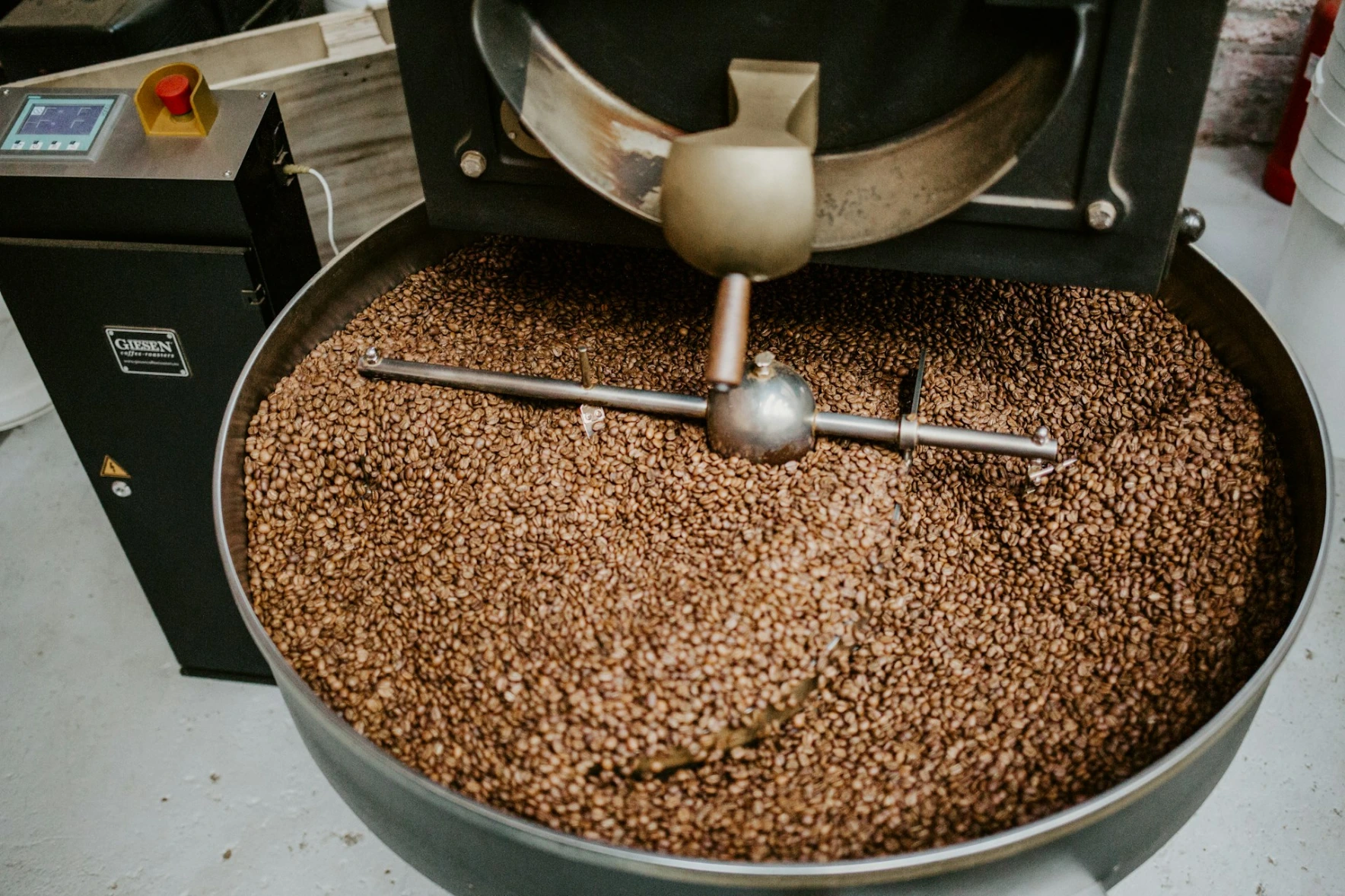
They are commonly used for:
Specialty coffee roasting
Espresso blends
Medium and dark roast profiles
Small and medium commercial roasteries
Large-scale coffee production
Different types of green coffee and blends
One advantage of a drum roaster is the level of control available to the roaster. By adjusting heat and airflow throughout the roast, the operator can develop different characteristics in the final coffee.
For businesses producing several coffee products, this flexibility can be particularly valuable.
Fluid-Bed Coffee Roasters
A fluid-bed coffee roaster, also called a hot-air roaster, uses heated air to circulate and suspend the coffee beans during roasting.
Because heat is transferred primarily through hot air, fluid-bed systems can provide rapid and highly responsive roasting. They are often associated with smaller-scale roasting, sample roasting, and applications where a clean and bright flavor profile is desired.
Fluid-bed roasters can be particularly interesting for roasters working with:
Light-roasted specialty coffee
Single-origin coffees
Sample roasting
Small production batches
Applications where fast heat response is important
The operating characteristics are different from those of drum roasters, so the choice should be based on the coffee style, production requirements, and roasting experience of the operator.
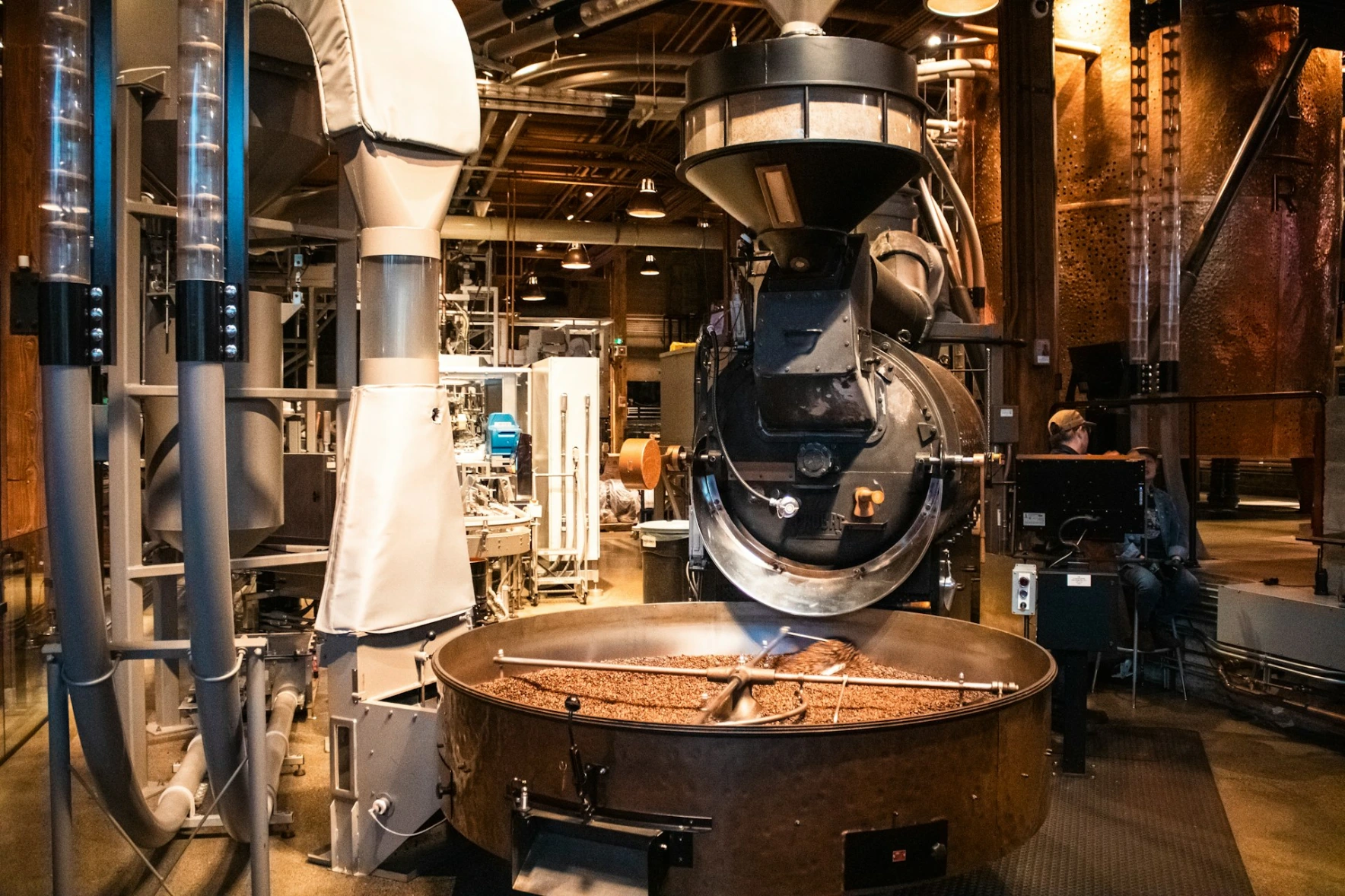
Home Coffee Roasting: What Type of Roaster Do You Need?
Home roasting remains popular among coffee enthusiasts who want to experiment with green coffee and develop their own roast profiles.
There are several ways to roast coffee at home, including:
1. Oven Roasting
An oven can be used to roast green coffee, particularly when it provides good air circulation.
However, oven roasting offers less precise control than a dedicated coffee roasting machine. Smoke, chaff, temperature fluctuations, and uneven roasting can also become practical challenges.
2. Stovetop or Pan Roasting
Pan roasting is one of the simplest traditional methods.
Green coffee beans are heated in a pan and continuously agitated to prevent excessive scorching. While inexpensive, this method requires constant attention and considerable manual effort.
Pan Roasting is definitely an as-old-as-the-Earth roasting facility to roast coffee beans with hundred years of history. And it still works effectively in order to prove that coffee is fair for everyone.
It can be useful as an introduction to coffee roasting, but achieving highly repeatable results can be difficult.
3. Home Coffee Roasting Machines
Dedicated home coffee roasters are designed to provide greater control over temperature, airflow, and roasting time.
They are generally more convenient and repeatable than oven or stovetop roasting, making them a practical choice for coffee enthusiasts who roast regularly.
Choosing a Commercial Coffee Roaster
If you are buying a coffee roaster for a café, coffee shop, roasting business, or wholesale operation, the decision becomes more complex.
The first question should not simply be:
"How much does the machine cost?"
Instead, consider how much coffee you actually need to roast and what type of coffee you intend to produce.
1. Consider Your Batch Size
Batch capacity is one of the most important factors when selecting a commercial coffee roasting machine.
A small roastery with limited weekly production may not need a large industrial roaster. Conversely, a growing wholesale business may quickly outgrow a machine that is suitable for a small café.
Consider:
Current weekly roasting volume
Expected growth
Number of batches per day
Roast cycle time
Cooling time
Operator capacity
Required production during peak periods
The rated maximum capacity of a machine should not be the only number you consider. Actual production also depends on roast time, cooling, loading, unloading, warm-up, and workflow between batches.
2. Think About Your Roast Profiles
Your desired coffee profile should influence the type of roaster you choose.
If you produce several roast levels and coffee styles, you may want a machine that provides extensive control over heat and airflow.
For example, a roastery producing espresso blends, medium-roasted commercial coffee, and darker profiles may prioritize flexibility and repeatability.
A specialty coffee roaster focused primarily on light-roasted single origins may have different priorities.
The machine should therefore support the style of coffee you want to produce rather than simply following the specifications of the machine itself.
3. Consider Your Production Volume
Commercial coffee roasters are available in a wide range of capacities.
Small machines can be appropriate for cafés, micro-roasteries, and sample roasting, while larger machines are designed for dedicated production facilities.
As your business grows, production requirements may change significantly.
A machine that is suitable when you roast a few kilograms per day may become inefficient when demand increases to hundreds of kilograms per week.
For this reason, it is useful to consider not only today's production but also your realistic medium-term requirements.
4. Evaluate Energy and Operating Costs
The purchase price is only one part of the cost of owning a coffee roaster.
You should also consider:
Fuel or electricity consumption
Maintenance requirements
Replacement parts
Exhaust and ventilation systems
Chaff collection
Installation
Operator requirements
Cleaning
Cooling systems
A lower-priced machine may not necessarily have the lowest total cost over its operating life.
For commercial buyers, total operating cost and production efficiency can be just as important as the initial investment.
5. Look at Automation and Control
Modern coffee roasting machines can range from manually operated systems to highly automated production equipment.
Depending on your business, useful features may include:
Digital temperature monitoring
Programmable roast profiles
Automated temperature control
Airflow control
Data recording
Batch tracking
Automatic cooling
Integration with production systems
For a small roasting business, manual control may provide the flexibility and hands-on experience that the operator wants.
For a larger production facility, automation and data recording can help improve consistency across multiple batches.
Drum Roaster vs. Fluid-Bed Roaster
The main differences can be summarized as follows:
| Feature | Drum Roaster | Fluid-Bed Roaster |
|---|---|---|
| Heat transfer | Conduction + convection | Primarily convection |
| Bean movement | Rotating drum | Hot-air circulation |
| Production flexibility | Broad | More specialized |
| Typical applications | Commercial and specialty roasting | Specialty, sample and smaller-scale roasting |
| Roast control | Extensive | Highly responsive |
| Common consideration | Versatility and production | Speed and clean flavor development |
The table should be viewed as a general comparison rather than a rule. Different machine designs can behave differently, and experienced roasters can achieve a wide variety of profiles using different technologies.
What Coffee Roaster Is Right for You?
The right coffee roaster depends on your specific requirements.
For Home Coffee Enthusiasts
Consider a compact home coffee roasting machine if you want convenience, repeatability, and greater control than traditional pan or oven roasting.
For Coffee Shops
A small commercial roaster can be appropriate if you want to roast coffee in-house and serve freshly roasted coffee to your customers.
Your decision should consider available space, expected daily production, ventilation, energy requirements, and operator experience.
For Micro-Roasteries
A flexible small-to-medium commercial roaster may be appropriate for businesses selling roasted coffee directly to consumers, cafés, restaurants, or local retailers.
Batch size, profile repeatability, and the ability to roast different origins are particularly important at this stage.
For Wholesale Coffee Businesses
Wholesale operations should place greater emphasis on production capacity, consistency, automation, energy efficiency, maintenance support, and the ability to scale.
A machine that can reliably reproduce the same roast profile across many batches is especially important when customers expect consistent coffee from one delivery to the next.
For Industrial Coffee Production
Large-scale manufacturers generally require high-capacity roasting systems integrated into a broader production line.
In this environment, roasting is only one part of the operation. Cooling, destoning, conveying, storage, grinding, packaging, quality control, and production management may all need to work together.
Questions to Ask Before Buying a Coffee Roaster
Before investing in a coffee roasting machine, ask yourself:
How many kilograms of green coffee do I need to roast each week?
How much do I expect production to grow?
What roast levels and coffee styles will I produce?
Do I need a drum or fluid-bed roasting system?
How important is automation?
What fuel or energy source is available?
How much space is available for the roasting equipment?
What ventilation and exhaust systems are required?
How easily can the machine be maintained?
Is technical support and spare-parts availability adequate?
What is the total operating cost?
Can the machine consistently reproduce my desired roast profiles?
Answering these questions before contacting a supplier can make the purchasing process much easier.
Final Thoughts
Choosing a coffee roaster is ultimately about matching the machine to your coffee, production volume, roasting style, and business objectives.
For home enthusiasts, simplicity and ease of use may be the most important considerations. For cafés and micro-roasteries, batch size and flexibility can become more important. For wholesale and industrial coffee businesses, production capacity, consistency, automation, energy efficiency, and long-term operating costs deserve careful consideration.
A good coffee roasting machine should not simply roast coffee. It should help you produce the quality, consistency, and volume your business requires.
Whether you are starting your first small roasting operation or expanding an established coffee business, taking the time to evaluate your roasting needs before purchasing equipment can help you make a more informed investment.
At WSCAFE, we work with coffee buyers and businesses looking for Vietnamese coffee products and solutions across the coffee value chain. Understanding the relationship between green coffee, roasting, and the final product is an important part of developing coffee products for different markets.