
What Is a Barista? Definition, Skills, Duties & Coffee Craft
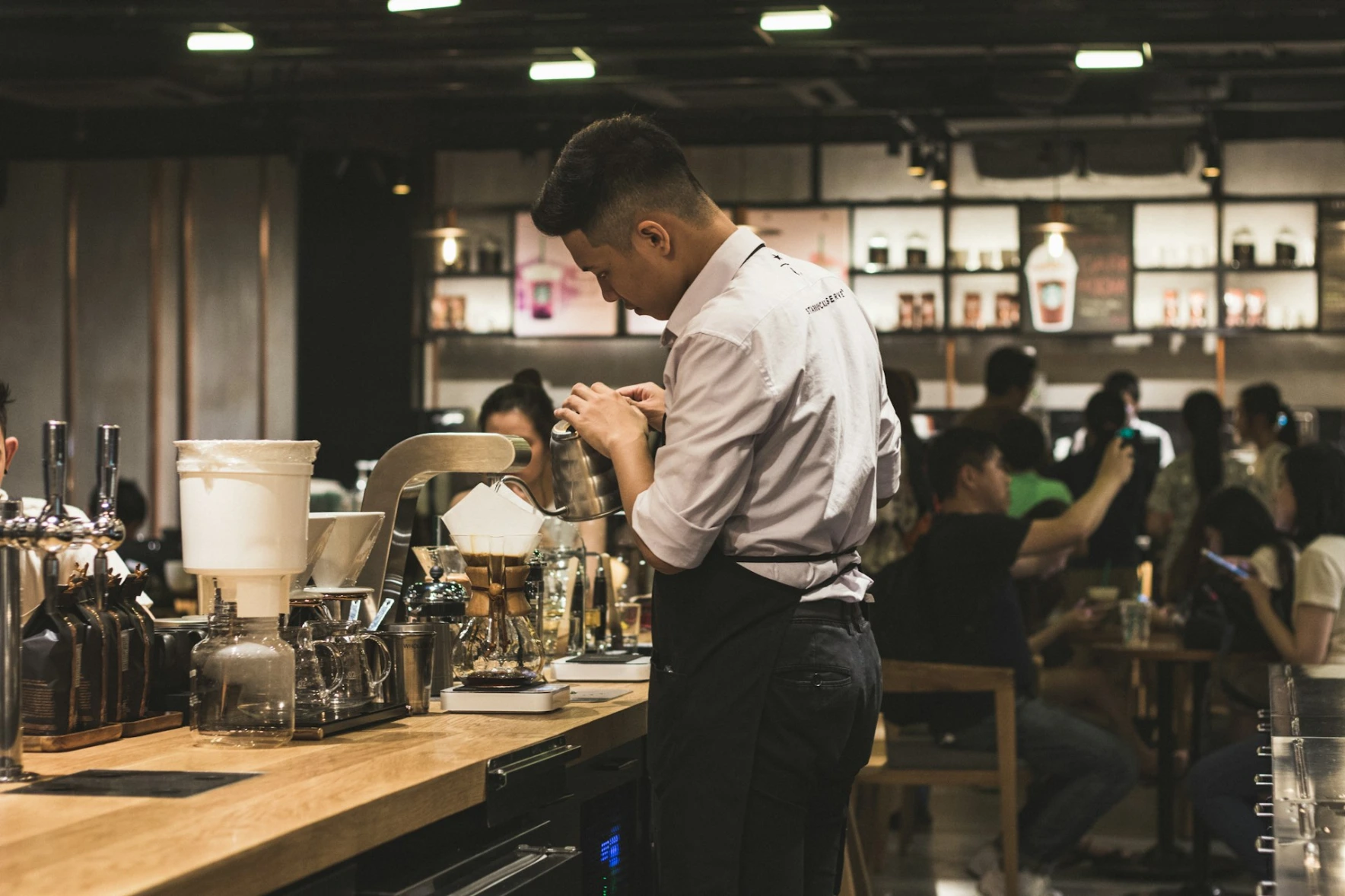
Walk into almost any modern coffee shop and you will probably see a barista working behind the coffee bar—grinding coffee beans, preparing espresso, steaming milk, brewing filter coffee, and serving customers.
But what is a barista, exactly?
A barista is more than someone who makes coffee. In today's coffee industry, a barista is a trained coffee professional who combines technical skills, coffee knowledge, sensory awareness, and customer service to prepare and serve beverages consistently.
From dialing in an espresso grinder to creating latte art and explaining the characteristics of a coffee origin, a skilled barista plays an important role in connecting coffee beans with the people who drink them.
What Does "Barista" Mean?
The word barista comes from Italian, where it traditionally refers to a person who works behind a bar or counter and serves beverages.
In English-speaking countries, however, the meaning has become more closely associated with coffee. Today, a barista generally refers to a person who prepares and serves coffee, particularly espresso-based beverages, in a café or coffee shop.
The plural form commonly used in English is baristas. In Italian, the plural forms are baristi for men and bariste for women.
While the word has Italian origins, the profession has become global. Baristas now work in coffee shops, specialty cafés, restaurants, hotels, coffee roasteries, and other hospitality businesses around the world.
What Does a Barista Do?
The responsibilities of a barista can vary depending on the coffee shop and its menu.
At a basic level, a barista prepares beverages and serves customers. In a specialty coffee environment, however, the role can involve much more.
Typical barista responsibilities include:
Grinding coffee beans
Preparing and extracting espresso
Steaming and texturing milk
Preparing cappuccinos, lattes, flat whites, and other espresso drinks
Brewing filter and manual coffee
Creating latte art
Adjusting the coffee grinder
Cleaning and maintaining coffee equipment
Taking customer orders
Answering questions about coffee
Maintaining consistency during busy service
Following food safety and hygiene procedures
Professional baristas may also be responsible for monitoring coffee quality, adjusting recipes, training other staff, and helping develop beverage menus.
Some baristas can roast coffee beans with roasting machines as well. But this is not a must for a barista. If there is a shop coffee roaster in a cafe where he or she is working, that barista can take care the roasting activities as his or her hobbies.
Is a Barista Just Someone Who Makes Coffee?
Not necessarily.
Making a simple cup of coffee can be relatively straightforward. Preparing espresso consistently, however, requires an understanding of several variables.
A barista may need to consider:
Coffee origin
Coffee variety
Roast level
Grind size
Coffee dose
Water temperature
Extraction time
Beverage yield
Water quality
Milk temperature and texture
Small changes in these variables can affect the taste and balance of the final beverage.
For this reason, specialty coffee has increasingly treated barista work as a skilled craft involving technical knowledge, sensory evaluation, and hospitality. Research into specialty coffee workplaces similarly describes baristas as craft workers responsible not only for beverage preparation but also customer interaction and day-to-day café operations.
The Essential Skills of a Professional Barista
Becoming a good barista requires more than learning a few coffee recipes.
1. Espresso Extraction
Espresso is one of the fundamental skills for many professional baristas.
A barista needs to understand how grind size, dose, water, extraction time, and other variables interact. The goal is not simply to produce espresso quickly but to achieve a consistent and balanced result.
The barista must also be able to recognize when an espresso tastes under-extracted, over-extracted, weak, bitter, sour, or otherwise unbalanced and make appropriate adjustments.
2. Coffee Grinding
Grinding coffee is another essential part of the barista's job.
Coffee beans are normally ground immediately before brewing because grinding increases the surface area exposed to air and accelerates the loss of volatile compounds.
A barista therefore needs to know how to adjust the grinder according to the coffee and brewing method.
For espresso, even a relatively small change in grind size can affect extraction speed and flavor.
3. Milk Steaming and Texturing
Milk preparation is an important skill for drinks such as cappuccinos, lattes, and flat whites.
A barista must learn how to introduce the appropriate amount of air into the milk while creating a smooth, fine texture.
Good milk texture is also essential for latte art.
4. Latte Art
Latte art is the technique of pouring textured milk into espresso to create patterns on the surface of a beverage.
Common designs include:
Heart
Rosetta
Tulip
Swan
Although latte art is visually appealing, it is not the most important measure of a barista's ability. Good latte art depends on correctly prepared espresso and properly textured milk, but consistency, taste, cleanliness, and service remain fundamental aspects of professional barista work.
5. Sensory Skills
A professional barista should be able to taste coffee critically.
Sensory skills help a barista identify differences in:
Acidity
Sweetness
Bitterness
Body
Aroma
Aftertaste
Balance
Understanding these characteristics helps baristas adjust brewing parameters and communicate coffee characteristics to customers.
6. Coffee Knowledge
Experienced baristas often develop knowledge that extends beyond the coffee machine.
They may understand how coffee is affected by:
Origin → Variety → Farming → Processing → Roasting → Grinding → Brewing
Knowledge of this entire coffee journey can help a barista understand why two coffees can taste very different even when prepared using the same brewing method.
What Equipment Does a Barista Use?
The espresso machine may be the most recognizable piece of equipment behind a coffee bar, but a barista typically works with many tools.
Common equipment includes:
Espresso machine
Coffee grinder
Tamper
Distribution tools
Milk pitcher
Digital scale
Knock box
Thermometer
Brewing equipment
Water filtration system
Cleaning brushes and tools
For specialty coffee shops, additional equipment may include pour-over brewers, batch brewers, refractometers, cupping equipment, and other tools used for coffee evaluation.
Understanding how to use and maintain this equipment is part of professional barista training.
Why Is Grinder Adjustment Important for Baristas?
One of the most important daily tasks for an espresso barista is dialing in the coffee grinder.
Coffee changes over time. Factors such as bean age, humidity, temperature, and the characteristics of the coffee itself can influence extraction.
A barista may therefore adjust the grind size to maintain a desired extraction and flavor profile throughout the day.
This is one reason why simply following a fixed espresso recipe is not always enough. A professional barista needs to observe, taste, and adjust.
Barista and Customer Service
A barista's job is not limited to what happens inside the espresso machine.
Coffee shops are hospitality businesses, so communication and customer service are also important.
A barista may need to:
Listen carefully to customer orders
Explain different coffee options
Recommend beverages
Answer questions about coffee
Handle special requests
Work efficiently during busy periods
Communicate with other staff
Maintain a welcoming atmosphere
During peak hours, a barista may prepare many beverages while simultaneously taking orders, managing equipment, communicating with coworkers, and maintaining cleanliness.

The ability to remain organized and consistent under pressure is therefore an important part of the job.
How Do You Become a Barista?
There is no single path to becoming a barista.
Many people begin by working in a café and learning from experienced colleagues. Others take formal barista courses or specialty coffee training before entering the profession.
Training can cover subjects such as:
Coffee fundamentals
Espresso preparation
Grinder operation
Milk steaming
Latte art
Brewing methods
Sensory evaluation
Coffee equipment
Cleaning and maintenance
Customer service
Formal qualifications can be useful, but practical experience is also extremely important. Developing consistency requires repeated practice and tasting.
Does a Barista Need to Know About Coffee Roasting?
A barista does not necessarily need to be a professional coffee roaster.
However, understanding roasting can be extremely useful.
The roast level influences how coffee behaves during brewing and contributes to the flavor characteristics of the final beverage.
A barista who understands the relationship between green coffee, roasting, grinding, and brewing can make more informed decisions when preparing coffee.
This is particularly relevant in specialty coffee shops, where baristas may work closely with coffee roasters and frequently change coffees or roast profiles.
Barista vs. Bartender: What Is the Difference?
The words barista and bartender have related linguistic origins but generally refer to different professions in modern English.
A bartender typically prepares and serves alcoholic and non-alcoholic beverages in a bar or hospitality setting.
Barista and bartender all start with "bar" which shares many common values. Actually, one can switch to the other easily. A barista can become a bartender and vice versa because these two have a very similar background.
A barista, in the modern coffee-industry sense, primarily prepares and serves coffee and espresso-based beverages.
Interestingly, the Italian word barista is broader than its modern English usage and traditionally refers to someone working behind a bar, where coffee and other beverages may be served.
Baristas and Specialty Coffee
The growth of specialty coffee has expanded the role of the barista.
In a traditional coffee shop, the barista may primarily focus on efficient beverage preparation and customer service.
In a specialty coffee shop, the barista may also act as an educator and communicator.
They may explain:
Where a coffee comes from
Whether it is Arabica or Robusta
How the coffee was processed
How it was roasted
Why it tastes the way it does
Which brewing method is recommended
In this sense, a barista can help customers understand the journey of coffee from origin to cup.
Barista Competitions
Barista skills are also showcased through professional competitions.
The World Barista Championship, organized by World Coffee Events, provides an international platform for professional baristas to demonstrate technical skills, coffee knowledge, presentation, and beverage preparation.
Competition has contributed to the development and visibility of barista culture around the world.
However, a championship-level performance is only one expression of barista skill. In everyday coffee shops, consistency, hospitality, efficiency, cleanliness, and the ability to produce great coffee repeatedly are equally important.
What Makes a Good Barista?
There is no single definition of a "good" barista.
However, successful baristas commonly combine several qualities:
Technical ability
They understand espresso extraction, grinding, milk preparation, brewing equipment, and coffee recipes.
Sensory awareness
They can taste coffee and recognize when something needs adjustment.
Consistency
They can produce the same beverage to an appropriate standard repeatedly.
Hospitality
They communicate respectfully and create a positive customer experience.
Attention to detail
They pay attention to coffee preparation, equipment cleanliness, recipes, and presentation.
Curiosity
They continue learning about coffee, origins, processing, roasting, brewing, and new techniques.
These skills become increasingly valuable as coffee businesses place greater emphasis on quality and customer experience.
The Barista's Role in the Coffee Journey
Coffee passes through many stages before reaching the consumer:
Coffee farm → Processing → Green coffee → Roasting → Grinding → Brewing → Cup
The barista is positioned near the final stage of this journey.
At this point, the quality of the previous stages must be translated into a beverage that the customer can actually experience.
A high-quality green coffee cannot automatically guarantee a great cup. Roasting, grinding, water, brewing parameters, equipment, and barista technique all influence the final result.
That is why the barista plays such an important role in the coffee value chain.
Frequently Asked Questions About Baristas
What is a barista?
A barista is a coffee professional who prepares and serves coffee and espresso-based beverages. In specialty coffee, the role can also include coffee education, sensory evaluation, equipment management, and customer service.
What does a barista do?
A barista typically prepares coffee beverages, operates and maintains coffee equipment, adjusts grinders, steams milk, serves customers, maintains cleanliness, and ensures beverage consistency.
Is being a barista difficult?
Barista work can be physically and mentally demanding, particularly during busy periods. It requires standing for extended periods, multitasking, attention to detail, technical skills, and customer service.
Do you need qualifications to become a barista?
Formal qualifications are not always required. Many baristas learn through workplace training and practical experience, while others attend professional coffee or barista courses.
What is the difference between a barista and a coffee maker?
The terms can overlap, but "barista" generally describes a trained coffee professional, particularly someone working with espresso-based beverages in a café environment.
Can a barista become a coffee roaster?
Yes. Barista experience can provide a useful foundation for understanding coffee, although roasting requires a separate set of technical skills and knowledge.
Final Thoughts
So, what is a barista?
A barista is much more than the person standing behind an espresso machine.
A professional barista brings together coffee knowledge, technical skill, sensory awareness, consistency, and hospitality to turn roasted coffee into a finished beverage.
From grinding beans and extracting espresso to steaming milk and talking with customers, every step can influence the final coffee experience.
As coffee culture continues to evolve around the world, the barista remains an important link between the coffee industry and the people who enjoy the drink.
For coffee lovers, understanding what a barista does can also provide a greater appreciation for the skill, knowledge, and work behind every cup of coffee.